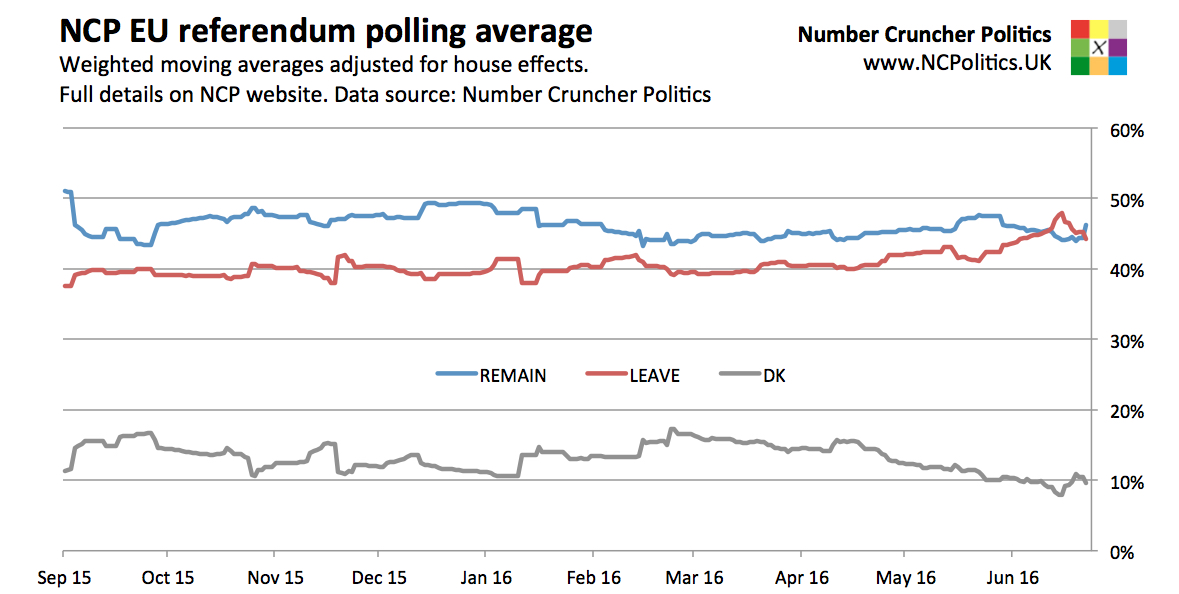
Five minutes to midnight

After one of the most extraordinary presidential elections in American history the time has come for the American people to make their choice. The bombshell announcement that the FBI was re-opening the “Emailgate” case, along with the massive rises in Obamacare premiums, led to a significant tightening of the race going into Election Day, although this trend has reversed in the last few days.

Donald Trump’s populist, anti-establishment and neo-isolationist message appears to be resonating with the American public who despise a corrupt, venal and out-of-touch political class, personified in the candidature of Hilary Clinton. The blue-collar billionaire’s “drain the swamp” slogan, like the Leave campaign’s “take back control”, has hit home with Middle America who are angry about the antics of a distant Washington establishment.

For British readers, we are in familiar territory. The polling is too close to call but the “experts” are overwhelmingly calling it for the status quo establishment candidate, in this case Hilary Clinton, to win. This is reflected in the calculations of the betting and financial markets who have priced in a Clinton victory. What the pundocracy are failing to anticipate is a potential “Brexit effect”, the unexpected surge in support, on Election Day, for the anti-establishment candidate which could result in a shock Trump victory.

Of course, the American elections and the Brexit referendum are very different and it maybe that making a parallel between the two political events will turn out to be wrong. The subterranean electoral forces, outlined in my recent post, principally a “shy Trump” factor, the rise in first time white working/lower middle class voters and a late swing to the Donald, will very likely play a significant role in determining the victor of the election.

The truth is that both candidates have a serious chance of winning this election tonight and nobody can know for certain what the American electorate will decide in the privacy of the ballot booth. However, on a balance of probabilities, I maintain my prediction, made at the beginning of the year, that the most likely outcome of the presidential election will be a victory by Donald Trump.

We will soon find out if the alligator really has managed to sink his teeth into Hillary Clinton.

Five minutes to midnight

The rise of Caesar

The finance house Citibank recently warned its clients in an election note of the risk of “emerging market” type political disruptions. Certainly the high degree of political polarization, the emergence of populist figures on both ends of the political spectrum and the warnings of post-election violence are closer to a developing world country than the most powerful, advanced and sophisticated country in the world.

I have therefore presented a scenario building exercise about a hypothetical post-election future for the United States. Please note that this is a scenario, not a forecasting prediction and it is highly unlikely that such events would unfold, should Donald Trump narrowly lose the election.

julius-caesar-300x233

“Political power grows out of the barrel of a gun.”

Chairman Mao

“The era of individualism, liberalism and democracy, of humanitarianism and freedom, is nearing its end. The masses will accept with resignation the victory of the Caesars, the strong men, and will obey them…”

Oswald Spengler (The Decline of the West)

The huge crowds watching the results come through on the night of 8 November 2016 were initially excited but became progressively more depressed as it become clear that Hilary Clinton was going to narrowly beat Donald Trump in one of the most polarizing US election campaigns in the history of the republic. At 4:00 in the morning, CNN called the election for Hilary Clinton and the huge crowd booed and chanted “CNN suck” and “lock her up” at the mega TV screen.

As America woke up to the news that Hilary Clinton had squeaked in with 273 electoral college votes the army of volunteer pro-Trump supporters who had been monitoring the poll stations were flooding the Trump campaign headquarters with warnings of massive voter fraud. As the social media websites started to cover reports of problems with electronic voting in key swing states, across the country, spontaneous groups of Trump supporters started rallying to resist what they saw as a rigged election.

In an explosive statement, Donald Trump, in an exclusive interview with Fox News in the evening of 9 November, denounced the result as rigged, illegal and refused to accept the legitimacy of President-Elect Hilary Clinton. Trump called on his supporters across the country to take up arms, join protests and refuse to accept the validity of the election. The political and media establishment condemned the comments as reckless, irresponsible and ill fitting of a political candidate.

Across the country, millions of ordinary Americans answered their hero’s call and small rallies were held to denounce the election result. Reports of armed clashes between Trump supporters and black militants in the south sent the stock market crashing and gold soaring to over $1,500 an ounce. President Obama, in an emergency address to the country, condemned the remarks by Donald Trump and called on all Americans to respect the election result. It didn’t work.

Whilst polling indicated that the majority of Americans respected the election result, a significant minority didn’t, and these overwhelmingly white working middle class Americans were committed to preventing the inauguration of Hilary Clinton. Major cities across the United States saw rallies and counter-rallies between Trump and Clinton supporters. In key southern and mid-western states, armed militias started to patrol the streets and joined tens of thousands across the “flyover” states in protesting the election result.

Global indexes continued to plummet as America entered a constitutional crisis amidst a worsening spiral of violence in its cities. Attacks on the police in the inner cities exploded and violent incidents between armed Trump supporters and black militant’s accelerated the drift into anarchy. On 28 November, the German banking giant Deutsche Bank collapsed due to massive derivative trades which had gone wrong. The resulting panic led to a disastrous drop in stock markets around the world, in particular, the stocks of the big American finance houses including Citibank, Goldman Sachs and JP Morgan.

The combination of another global banking crisis, a constitutional crisis within the United States and the scenes of thousands of Germans queuing to pull their money out of the German banking system was a “perfect storm” that destroyed any remaining confidence in the American banking system. On 1 December, President Obama, in conjunction with President Elect Clinton, announced an emergency package of measures to bail out the American banks.

Donald Trump, who was now holed up and surrounded by heavy security, condemned the second bailout package by social media. The self-proclaimed President Elect, accused Crooked Hilary of enriching her super-rich Wall Street donors over the interests of the American taxpayer. Millions of ordinary Americans, outraged and enraged by a second bailout of the “banksters” started joining the pro-Trump rallies across the country. In an ominous warning to the Washington elite, in many cases, local police were clearly sympathetic to the protest movement.

Donald Trump ratcheted up the pressure and called on his armed supporters to march on Washington which was scheduled to be on Saturday 3 December. Millions answered the call and up to 3 million citizens, armed to the teeth, started to find their way to Washington D.C. President Obama, along with his key national security advisers, agreed to surround the capital with National Guard, Homeland Security and police units to prevent the armed citizens from getting into the centre of the capital. A ring of steel surrounded the capital of the country.

As hundreds of thousands of armed citizens reached the heavily armed lines of policemen and Homeland Security units on the morning on 3 December, something extraordinary happened. The policemen and soldiers chatted to the protesters and it became clear that the overwhelming majority of the men in uniform were sympathetic to the protesters cause. As the crowds continued to grow the officers decided that the risk of shooting was too high and for the sake of civil order the protesters would be allowed through. The police units were the first to open up a corridor and a huge roar was heard from the crowd as they poured into the heart of the capital.

Future historians would note that pre-election polling had indicated that the majority of ordinary soldiers had backed Donald Trump and every single police union in the country had endorsed Donald Trump for president, prior to the election. It was well known that the police despised Hilary Clinton and many would wonder whether elements within the police had deliberately allowed the protesters through in revenge. Either way, the “wall of steel” had been breached and citadel was now open to being stormed.

At this point, amidst chaos, factions of the military and police units joined the armed protesters as they surged towards Congress and the White House. The White House staff got into helicopters and flew from the capital in panic as shooting broke out within the city. President Obama and Donald Trump had an extremely tense conversation and failed to reach an agreement. With the world media watching agog as armed protesters surrounded Congress, baying for Clinton’s blood, the US General Staff had an emergency video conference with Trump’s inner circle.

The Generals blinked first. Trump demanded and got the right to take over the government as part of a national unity government and would be declared the official President-Elect of the United States. President Obama, Congress and the political class would be given a fait accompli.

Amid huge security, a fleet of military aircraft, with key American Generals and the Trump team, flew into Washington. The White House had now been cleared and was protected by heavily armed marines answering only to the General Staff. Donald Trump, now President-Elect, walked into the White House and at an emergency press conference, announced to an astonished world that he was now leading a military government. The new American strongman, surrounded by five star generals, ordered all citizens to return to their homes until civil order was restored.

The era of the Caesar has arrived…

The rise of Caesar

Guest post: Hillary Clinton and the alligator

Forecasting Intelligence would like to welcome a guest post by an influential political journalist who closely follows US presidential politics. This is their unique take on the US elections.

Hillary Clinton is wrestling an alligator. And the alligator’s name is Donald Trump. A metaphor, of course, but let me explain.

How does an alligator capture and kill it’s prey? It lurks in the dirty, disease-ridden swamp where it lives and waits patiently beneath the water.

It’s prey arrives, either to look for fish or to drink some of the water on the edge of the swamp. And the alligator strikes.

It’s not the bite of its massive jaws that kills it’s prey, however. The alligator takes hold of the bewildered beast and drags them into the dirty, disease-ridden swamp – his home territory, where he can survive and his prey can’t.

He wrestles the prey and he rolls around with them at the bottom of the swamp covering them in all the festering scum, filth and disease he lives in day-to-day.

Battered, bruised, weary and covered in filth the prey finally submits and the alligator sinks its teeth into its neck and kills it.

Hilary Clinton is wresting with Donald Trump the alligator. At the bottom of his swamp.

The release of a video tape of Donald Trump making lewd remarks about women was not a massive surprise. But everyone is acting as if it was – in false hope that it will kill him off.

It was actually a boon for his campaign. It was gloves off time and plunged the debate into a mud-slinging contest and boy can you sling mud at Hilary Clinton. So much in fact that most of her supporters are now at best slightly disillusioned with her and at worst actually wondering whether it is her or Trump which is in fact the lesser of two evils.

Email-gate, Bill’s dalliances, Benghazi, her Wall street-puppetry, the list goes on with Clinton.

Clinton strayed into Trump territory – his metaphorical swamp – like so many of his rivals. Jeb Bush, Marco Rubio, Ted Cruz – they all wandered too close and were dragged down and drowned by Trump. One after the other.

Donald Trump’s best shot of winning this election is making so many voters not want to bother voting for Hilary Clinton that they won’t. And day-by-day as he grabs all the headlines, sure enough he will gradually achieve that.

Trump’s supporters are swamp dwellers also – they are ‘deplorable’, didn’t you hear – and will not be fazed by the depths this election showdown is sinking to.

The Donald’s tactic throughout his campaign has been to drag his opponents down to his toxic level and beat them with experience in a mud-slinging contest.

He is on his way to achieving this with Hilary Clinton. And will be elected PUSA on 8 November.

Guest post: Hillary Clinton and the alligator

Can the Donald pull it off?

Older readers of my blog will recall a similar title, published only weeks before the Brexit referendum, in which I discussed whether Middle England would break for Leave. At the time, the overwhelming consensus of the political and media elites (the “Pundocracy”), was for a narrow Remain victory. Certainly the polling evidence indicated that the British electorate, who had consistently favoured Remain (in the poll of polls) throughout most of the campaign, would stick with the status quo. As it happened, the electorate narrowly voted to leave the European Union (“EU”), which confirmed that my “educated hunch” was more accurate than the galaxy of betting markets, opinion polls and received wisdom of the “experts”.

So the first thing to note is that just because Donald Trump is behind Hilary Clinton in the polls, it does not mean that he has lost the election. At the beginning of the month I noted that Trump needed to step up a gear in the following second and third presidential debates if he was to have a chance of winning the election. On balance, he has achieved that goal with a strong comeback performance in the second debate and a solid final finish in Las Vegas.

According to Frank Luntz’s focus group on the third debate, Trump performed very well on key “bread and butter” issues, like the economy, trade, border security and immigration, even with Democratic leaning voters. Hilary performed better on the important issue of which candidate appeared more “presidential”, a subject in which Trump has trailed in the opinion polls. The sex tape and allegations of groping by the Republican presidential candidate in the past has certainly damaged Trump in the eyes of the electorate and amplified concerns over whether he is fit to take on the responsibilities of the presidency.

So to summarise, the state of play, post the debates, is that Trump has secured his key objective of appearing sufficiently “presidential”, if not at the same level as his opponent. The Republican candidate has also succeeded in connecting with the electorate on key issues like trade, immigration as well as being a change-agent who will reform a failing political establishment. It is clear that the sex scandals have damaged the Trump brand, particularly with female voters, and ensured that the real estate billionaire has failed, so far, to seal the deal with undecided voters.

There are certain underlying factors which I don’t think are being picked up by the surface polling being conducted. These could ensure that the actual election result is much closer than expected, and indeed, could catapult the Donald into the White House. I will list them as follows;

Shy Trump voters

Anecdotally, most open Trump supporters know of individuals who have kept their support for the Donald secret, out of fear of social rejection or a backlash from friends, family or work colleagues. There is some polling evidence that suggests that Trump performs better in anonymous online polls than traditional landline polling which requires voters to confirm to another human being their voting preferences. British readers will likely have heard of the “shy Tory” phenomenon during general election campaigns.* I suspect that approximately 4% of the electorate are shy Trump voters and they will have a significant impact during the presidential election.

*As a Conservative supporter during the 2015 GE, I kept my Tory views to myself, as I was aware that among my left-leaning acquaintances the Conservative Party was considered a toxic brand. So I have personal experience of the “shy Tory” factor.

Redneck surge

During the Brexit referendum, the polling professionals had the unenviable task of attempting to forecast turnout numbers for the different social classes. This was challenging as Britain has not had a major referendum in decades. The post-mortem of the failure of the polling industry to successfully predict the Leave result appears to place a significant part of the blame on the failure to anticipate the much higher turnout of working class citizens who don’t normally vote in general elections. It was the millions of white working class voters from council estates across Britain who helped ensure Leave had a shock victory.

I suspect that something similar will happen in this year’s presidential campaign. Donald Trump has tapped into the frustrations of the white working and lower-middle class layers of society who traditionally have a poor turnout at elections. These voters, who despise the political class, will likely make the effort to turn out, as they perceive the Republican candidate will materially benefit their interests. The fact that Trump doesn’t always behave in a presidential manner will likely endear him to this group of voters. In key swing states, a major up-surge of white working class support could be the key to victory.

Base turnout

It is well known that there is an “enthusiasm gap” between the two campaigns, with Trump regularly hosting huge rallies, compared to Clinton. Trump has fired up his base to go out and vote for him. If the media de facto declare Clinton as a winner in the coming weeks, on the basis of her narrow polling lead, this may lead to complacency among her soft supporters. Should Clinton fail to bring key electoral constituencies to the ballot box, including younger Latino, African American and left-leaning youth, she may lose key states on election night.

Protest vote

This may not be a significant factor in the election, but should the overwhelming consensus of the Pundocracy be that the Democrats have the election in the bag; it may encourage former Bernie Sander supporters to vote for Trump as a protest vote against Clinton. During the Brexit referendum, there was some evidence to suggest that a small proportion of the Leave electorate voted to make an anti-establishment protest, without ever expecting Leave to actually win. When elections are extremely close, such minor dynamics can have a profound impact on the eventual winner.

The “f*** it” factor

Polls have shown that a large majority of the American electorate are unhappy with the trajectory of the country, are alienated from a political class and feel that the economy is geared towards the very rich. There are not many opportunities to express your grievance against the political establishment in the modern era, but voting for Donald Trump is certainly one way of doing so.

I suspect that millions of voters, who may at the moment be reluctantly planning to vote for Hilary Clinton, may decide in the very last day or so before 8 November 2016, to take a gamble with the Donald. For citizens who haven’t had a wage increase in 10 years, who lost their home during the Great Recession, who are enraged that not a single Wall Street banker has gone to jail or simply despise the Washington establishment, Donald Trump is a vehicle to project their sense of injustice, anger and desire for revenge against an out-of-touch financial, media and political elite.

The question is whether concerns over the politically incorrect, and at times offensive language, of the Republican candidate will override the hard headed appeal to the interests of working Americans by the blue-collar billionaire. Trump’s policies on deporting hundreds of thousands of illegal immigrants, imposing border security and the return of trade tariffs will materially benefit the majority of legal lower skilled Americans. Polling shows that Trump’s hard-line position on letting Muslim refugees into America chime with the wary instincts of the majority of the population.

To summarise, this presidential election will come down to a clash between interests and values. Donald Trump will win this election if he is successful in making a hard-headed pitch to the material interests of Middle America with an “American First” platform over the values based politics of political liberalism.

Can the Donald pull it off?

Book review of Decline and Fall: The End of Empire and the Future of Democracy in 21st century America

decline-and-fall

As we enter the final weeks of an extraordinary, brutal and at times profoundly depressing presidential election, very little has been said by either candidate, on the coming challenges facing America in the near future.

John Michael Greer has written a superb book on the coming collapse of the American global empire, a tottering giant with a stagnating economy increasingly dependent on manufactured “paper wealth”, exploding national debt and a military which for all its hi-tech brilliance, is heading towards a catastrophic defeat within the next decade.

As the foundations of America’s Imperial Age disintegrate, the world faces an even greater challenge, the decline and coming end of the “empire of time”, the exploitation of non-renewable resources like oil, coal and gas at an unsustainable rate, which I have covered in my post “winter is coming”. What the Washington elites fail to understand is that these two crises, the impending end of their global empire and the descent into the era of limits, will unfold at the same time.

Greer succinctly explains why the brittle American political and economic system is unprepared for this “perfect storm” which will impact America in the near future. Readers may note that I have used the term “Scarcity Industrialism” in the blog to explain the era which we are starting to transition to, a term which derives from John Michael Greer, in a number of blog posts. The issues raised by Greer have been discussed by governments around the world, in particular military circles, which are receptive of the national security risks of resource scarcity.

Few people are aware that the German military has also investigated the emerging era of resource scarcity, in particular oil, in a far-reaching report. As the magazine Spiegel notes, the report “…uses sometimes-dramatic language to depict the consequences of an irreversible depletion of raw materials. It warns of shifts in the global balance of power, of the formation of new relationships based on interdependency, of a decline in importance of the western industrial nations, of the “total collapse of the markets” and of serious political and economic crises.” Whilst the full report, at 112 pages, is a long read, it is worth reading to understand the multitude of challenges facing the industrial world. One can be sure that other similar reports are circulating among military and security policymakers around the world.

Greer considers that the most likely trigger for the end of American military and economic hegemony will be a military defeat, at some point, within the next decade. The US military is a formidable military machine but it is extremely dependent on hi-tech systems (GPS, satellites etc) that, if knocked out, would deal a devastating blow to its operational capabilities. The biggest weakness of the American military, its aircraft carrier fleet, is the means by which a military opponent can use asymmetrical warfare to cripple the American military. In Greer’s fictional novel “Twilight’s Last Gleaming”, these ideas are explored in a fast paced thriller, which I have recently reviewed.

The shattering impact of a military defeat would lead to the end of dollar hegemony, unleash a massive economic shock to the American economy and likely cause a systemic crisis within the American political system. The rise of Donald Trump is an early sign that the growing gulf between an increasingly pauperised Middle America and a tiny wealthy elite is leading to growing political instability. Should a significant section of the American electorate give up on the democratic process, they may turn to violence or rally behind a charismatic strongman who promises a return to the glory days of Abundant Industrialism.

The overall message from Greer’s book is that America is particularly vulnerable in the transition into the age of resource limits and will struggle to adapt to the coming end of its privileged status in the world economic order. Local communities are best advised to mitigate and adapt at a local level, as best they can, to the coming challenges as a bankrupt federal government will be unable to keep the many promises made during the golden years of abundance.

Whoever is elected the next president of the United States will have to start dealing with some of these challenges. The recent turmoil in the markets over the future of Deutsche Bank, the German banking giant, is a reminder that our western banking system is still very fragile and could relapse into a systemic crisis at any point. This is just one danger point in a world which is increasingly unstable and troubled.

I will be exploring some of the themes discussed in this book review over the course of the next few weeks, as well as publishing my final forecasting article on the likely outcome of the pivotal American presidential election, due on 8 November 2016.

Book review of Decline and Fall: The End of Empire and the Future of Democracy in 21st century America

The May Falle

During World War 2, the Red Army perfected the art of the strategic encirclement and entrapment of the mighty German Wehrmacht, resulting in the eventual destruction of the Third Reich. The Soviets baited the Germans into driving forward, encircled them and proceeded to starve the invaders into surrender. The Germans had a name for this, falle, meaning “trap”.

The British Prime Minister Theresa May, in her speech to the Conservative party conference, was a well crafted strategic encirclement operation against the Labour Party, which is in danger of getting trapped in May’s own political falle. Theresa May articulated a vision of a country that managed and regulated migration, used the state to protect the “left-behind” of a globalized economy and took on the vested interests of a wealthy City of London dominated establishment. It was a master class of the new centre-right populism where elections are now won.

Of course, the only reason why Theresa May is now occupying 10 Downing Street was the Leave victory during the Brexit referendum. The Brexit result had many causes, but one of the principal factors was the legitimate concerns of the British public about the economic and cultural implications of mass migration into the United Kingdom.

The consequences of European Union (EU) migration has predominately been an economic one, with low-skilled but hard working East European migrants taking jobs which might otherwise have been taken by the indigenous working class. The influx of Polish plumbers, for example, has inevitably had an impact on British born plumber’s wages, which has stagnated as a result. On a broader level, East Europeans broadly share similar attitudes to British people on many issues, and the high number of marriages between British and Polish citizens is a good example of how well EU migrants have integrated into British society.

There is no doubt that concerns over the mass immigration of EU migrants into the country, and their impact of wages and public services, impacted the referendum result. However, I would argue that it was the collapse of the external borders of the EU, and the mass influx of predominately Muslim refugees, that drove the average voter to vote out on 23 June 2016.

It is well known that the Muslim communities of Britain have struggled to integrate into the wider British society and opinion polls reflect the very different attitudes to woman’s rights, homosexuality and the role of religion in society. The boycott by sections of the Muslim community of the government’s Prevent programme illustrates these tensions. The Prevent programme was created to encourage citizens to report any potential terrorist cases to the police, but has been widely condemned by Islamists as a stigmatisation of the Muslim community.

Muslim critics have been very loud in their criticisms of Prevent, but little effort has been invested, in constructive proposals on how to deal with the growing extremism problem among the younger Muslim population. Question marks about the underlying loyalty of the Muslim population are a below-the-radar concern for broad layers of the British public.

The influx of Muslim refugees, many from deeply conservative countries, into the heart of the European Continent in 2015 transformed the nature of the EU migration debate in the minds of the average voter. The prospect that these refugees would at some point become European citizens and be free to move en masse to the UK was an intolerable prospect for many British people. It is now becoming clear that an unknown number of the hundreds of thousands of migrants are ISIS sleeper terrorists, sent to wreak death and destruction in the West.

The majority of the British public concluded that re-gaining control of Britain’s borders was a vital economic and security matter over and above the potential economic damage of exiting the EU.

The Labour Party is currently having an internal debate on whether to campaign on remaining in the single market or taking a “hard Brexit” approach, similar to the Conservative Party. The re-elected Labour leader Jeremy Corbyn is ideologically committed to an open borders policy and has indicated that he will campaign to stay in the single market. Should Labour go into the next general election on a platform of prioritising membership of the single market over controls over migration, it will be slaughtered in the ballot box. This is the Theresa May falle.

The Conservative Party is slowly but systematically pinching the economic programme of Corbynism, modifying and adopting it as government policy. May has promised a crackdown on corporate tax evasion, the “fat cat” culture of the City and the cultivation of an “industrial strategy” designed to build up Britain’s industrial base. This platform is music to the ears of traditional Labour voters. The Conservative Party is moving to bring on-board Labour voters, just as Donald Trump is doing with blue-collar Democratic voters, in the United States. You may hear a lot more in the coming years of the May Labourites and how they will bring an electoral landslide for the Tories at the next general election.

The Conservative Party is the most successful political party in history because of its ruthless and instinctive drive to seize and maintain power. The Telegraph’s writer Ambrose Evans-Pritchard has written eloquently on the demise of the globalised neo-liberal world order and notes that the Tories, with their instinctive lust for power, are the first to adapt to the new era of state interventionism, protectionism and the return of the nation-state.

The Tories are well positioned, under their new leader Theresa May, to strengthen their hold on the country as we enter the long twilight years of Scarcity Industrialism.

The May Falle

Passing the audition

On Monday 26th September 2016, Donald Trump passed the audition for the role of Commander in Chief, but hardly with flying colours.

If it was a debating contest the Democratic candidate Hilary Clinton would have overwhelmingly won. Clinton was far more polished, policy focused and concise in her answers. In contrast, Trump was on the defensive for much of the debate, failed to effectively attack her on her weaknesses and tended to ramble and repeat himself.

It is important to remember that this is no conventional presidential election and Donald Trump is not your typical professional career politician, of which the average voter is well aware. The watching electorate expected Hilary Clinton to perform well and she matched those expectations on the night.

Donald Trump, as the political outsider with no prior experience in politics, was never expected to technically perform to the standard of Hilary Clinton. Trump’s challenge was to prove to the electorate that he had self-control, could plausibly appear presidential and was able to connect on the major issues affecting the nation. Overall, Trump succeeded in all those aims.

As Scott Adams explains so well in his blog (which I recommend reading), by avoiding the subject of Bill Clinton’s sex scandals, he showed self-control and remained presidential, even though it effectively lost him the debate. The perceived “risk” factor of voting for Trump is a major issue of concern for undecided voters, and his performance at the debate goes some way in reassuring those voters, who are thinking of voting for Trump.

The Pundocracy have spent an inordinate amount of time discussing issues of little relevance to the average voter. Emailgate, birthergate and other issues may reflect poorly on the candidates but they are not the “bread and butter” issues that affect the day-to-day lives of normal voters. When Trump spoke about returning jobs to America, the major problem of gun crime in America’s inner cities and his opposition to futile Middle Eastern wars, it felt to me that he connected with the watching electorate.

A number of polls, taken after the debate, suggest that this was the case. According to a scientific flash poll by Breibart/Gravis, Trump won 46 percent versus 42 percent to Clinton, on which candidate was considered more “plausible” as president. On the question of ‘Who showed that they care about people like you?’ Trump won that 49 percent to 44 percent for her.

A PPD Post Debate Poll suggested that Trump scored with undecided voters who felt that although Clinton won the debate, Trump appeared presidential and came across as more genuine and passionate about the major issues, including the economy.

The media have promoted the narrative, post-debate, that the night had been a disaster for the Trump campaign and this may have played a role in the modest bounce in the polls for Hilary Clinton since the debate.

My own view is that Donald Trump has failed, so far, to seal the deal with the American people. Millions of Americans still have doubts whether Donald Trump is ready to enter the White House, and it is up to him to overcome these concerns, if he wishes to win the election. The good news for the Trump campaign is that the next two debates are a huge opportunity to improve his performance and persuade the watching audience that he can do better than scrape a pass on the most powerful job audition in the world.

Trump has made significant strides in transitioning from the aggressive populism where he started, to the more serious centre-right political space, where elections are won. I have written before that the political sweet spot is in the populist centre-right. The Republican candidate is edging closer to that invisible line, on the political spectrum, when the majority of the electorate will vote for the Donald. He isn’t there yet though and there is still a possibility that he won’t reach that line before Election Day on 8 November 2016.

Whether Trump can step up a gear in this final stage in the presidential election race and surge to victory is the million dollar question. If he can, than the most likely outcome of the presidential race will be a victory for Donald Trump, which I predicted at the beginning of the year.

Passing the audition

The global implications of a Trump presidency

The presidential elections on 8 November 2016 are looming, and with the polls showing Donald Trump only narrowly behind Hilary Clinton, the prospect of a Trump presidency is now being taken seriously around the world’s embassies.

The first presidential debate is due on Monday 26 September and will be a key moment in this extraordinary election campaign. Should Donald Trump perform well and connect with the tens of millions of Americans watching, the momentum will very likely take him to the White House. There is still a possibility that the Trump campaign could still implode in the coming weeks, but the most likely outcome, will be a victory for the Republicans on election night.

I intend to outline in this article, the likely global implications of the rise to power of President Donald J Trump, as we enter into the era of Scarcity Industrialism. The world faces significant challenges, including accelerating manmade climate change, growing resource scarcity, and instability across the North Africa and Middle East (“MENA”) region, the rise of radical Islam and the fragmentation of the European Union (“EU”) post-Brexit with the rise of populist right-wing forces across the Continent.  These are not separate trends but are in fact intertwined, feeding off each other and deepening the disintegration of the post-war liberal international order.

At the root of these multiple challenges are the Limits to Growth mega-trend, so eerily forecast by the Club of Rome report published in the early 1970’s, and explored in my recent post “winter is coming”. A President Trump will have to navigate these treacherous waters and react to major international events in the context of these looming global headwinds.

Donald Trump’s core foreign policy idea is an “American First” approach to global commitments, treaty alliances and free trade. Critics have styled this approach as isolationism but it is in fact a return to the realpolitic “realist” tradition of international relations under the Nixon-Kissinger era. It was not a coincidence that the location of Trump’s first major foreign policy speech was at the former Nixon Centre in Washington DC.

Trump’s instincts will be to work with authoritarian leaders, jettison the ideology of human rights and liberal internationalism and drive hard bargains through the leverage of American military and economic dominance. Donald Trump’s background is a real estate billionaire and being “unpredictable” is an important part of negotiations. Trump will thus employ the Nixonian “Madman” strategy of disorientating both allies and adversaries around the world to maximum affect, as he develops and matures, as a world leader.

Donald Trump understands that with the gigantic American national debt growing, the long-term sustainability of the vast global network of military bases and treaty commitments to her allies is untenable. A partial strategic withdrawal and rebalancing of America’s global role is therefore a realist response to the crushing monetary burden of being the self-appointed world policeman. The strategic thinker and national security advisor under the Carter Administration Zbigniew Brzezinski has recently also argued such a shift in foreign policy in the American Interest.

Trump goes to Russia

If elected, a President Trump will arrange a grand strategic reset in relations with the Russian Federation. This Nixonian “Trump goes to Russia” pivot will likely include a deal to secure the future of the Syrian Assad regime, close military cooperation in the crushing of ISIS in the Middle East and the de facto drawing up of spheres of influence in the borderlands between Russia and Eastern Europe.

President Putin and President Trump will also agree to a realpolitik deal on Ukraine (which could be split in two or become a neutral buffer zone outside of NATO), the recognition that Belarus is part of the Russian sphere and a de facto or de jure agreement that Crimea is recognised as part of the Russian Federation. The crippling economic sanctions on Russia will be lifted in return for President Putin guaranteeing the security of Eastern Europe, joining an American led alliance against the rising great power China and cooling relations with Iran.

It is even conceivable that Trump will unilaterally agree to effectively dissolve NATO and replace it with a pan-European security architecture, including Russia, focused on counter-terrorism. President Putin will reorient the Russian strategic focus eastwards in return for guaranteeing the borders of a post-NATO Europe. Such a deal would place the bulk of the responsibility for the future defence of Europe on European shoulders, something very much in line with previous comments by Donald Trump.

The Brussels cold shoulder

The bulk of the European political class will be stunned and horrified by a victory of Donald Trump. Relations between Europe and America will return to a diplomatic Ice Age, far worse even, than during the run up to the 2nd Iraq war. Donald Trump will be the first US president to oppose the European project and welcomed the decision by the British public to leave the EU, when he visited Scotland on 24th June 2016.

One of the beneficiaries of a Trump presidency will be Prime Minister Theresa May of Great Britain, who will find a powerful ally, as article 50 is invoked at some point next year to leave the EU. European leaders will be profoundly troubled by the arrival of President Trump and this will increase the importance of ensuring an amicable divorce with the United Kingdom. Britain remains a powerful economic and strategic great power and it would be strategically foolish of the major European powers to “punish” the UK in the context of an unpredictable Trump America.

Right-wing populist and nationalist political forces across Europe will also benefit from the legitimacy garnered from a Trump presidency. The prospect that Marine Le Pen of the National Front will win the French presidential elections in May 2017 will be increased by the arrival of Donald Trump in the White House.

Should the eurozone enter another major economic crisis or a major European state votes to leave the Euro and/or the EU, than President Trump will not attempt to prop up a disintegrating European project. Europe will be on its own.

The Middle East Cauldron

The big economic shift in the past decade has been the energy boom in North American oil which has significantly reduced America’s dependence on Middle Eastern oil imports. This gives a Trump presidency greater room for manoeuvre in the maelstrom of Middle Eastern geopolitics.

Donald Trump has confirmed that the destruction of ISIS will be his primary focus should he be elected president. I would expect that Trump will continue to develop on the tentative moves by Secretary of State John Kerry to work with the Russians in the war against the Islamic extremists. Trump may be prepared to take greater risks in upsetting traditional allies, like the Gulf States, in securing the destruction of ISIS. Trump will expect a military and financial contribution from the oil rich Saudi Arabia, UAE and other allies in the struggle against ISIS and resolving the international refugee crisis. A President Trump will likely threaten the withdrawal of the US security umbrella should the Gulf States not cooperate on eradicating ISIS,  assist with the refugee crisis or end the promotion of radical interpretations of Islam.

Trumps inflammatory call for the temporary ending of Muslim migration into America during the Republican primaries will not be forgotten by the Muslim world. The election of Trump will be seen by broad sections of the Muslim world as an attack on Islam itself. Trump will soften his rhetoric as president and reach out to the Muslim world, with a message of cooperation against the ideology of radical Islam, which is spreading throughout the region.

Even if the self styled “caliphate” is defeated by an American led coalition; the ideology will survive, and indeed will be enhanced by a Trump presidency. Radicalisation of young Muslims will continue to accelerate throughout the Muslim world, leading to more terrorist attacks in the coming years, as is already happening in Europe.

It is unlikely that Trump will actually revoke the Iranian deal but he will certainly put on ice the growing rapprochement with the Iranian regime. Beneficiaries of a Trump presidency will include Israel and Egypt, whose respective leaders have both had difficult relations with the Obama Administration.

On balance, apart from the energetic pursuit of the destruction of ISIS, it is likely that a President Trump will disengage from the Middle East cauldron.

Return of protectionism

One of the consistent themes of Trump, throughout the decades, is his distrust and opposition to free trade deals. In the Trumpian worldview, free trade deals disadvantage American economic interests, destroys the industrial base and reduces the standard of living of American workers. Although the Congressional opposition will be considerable, Trump will attempt to impose tariffs on Chinese imports, at some point during his presidency.

The looming economic recession, which appears likely to happen, next year, could act as a trigger for a radical change of direction on global economic policy. Public support for free trade has collapsed over the last decade and with the Bernie Sanders insurgency fuelled by hostility to NAFTA and the draft Trans-Pacific Partnership (“TPP”), the Democrats may join forces in embracing protectionism.  Should Donald Trump successfully push through tariffs against Chinese imports, the impact on the globalised free trade liberal order will be profound. Trump may consider the short-term economic disruption a price worth paying for the long-term strategic goal of restoring America’s industrial base, encourage the on-shoring of American jobs and becoming a self-sufficient economic superpower.

Indeed, rather than abolishing NAFTA, Trump may instead promote a protectionist North America trade bloc, with Mexico and Canada benefiting from  preferential trade deals, as a sweetener, to joining such a trade bloc. The strategic vision behind such a withdrawal into North American protectionism will be the looming global oil crunch, which will bring into focus, the growing threat of resource scarcity by the end of this decade. America has the economic and strategic depth to successfully “go it alone” with its neighbors. Even if Trump fails to achieve this self-reliant vision of America in a post-neoliberal world order, the mere prospect of it, will accelerate the transition into the era of Scarcity Industrialism.

Overall, it remains to be seen how much of the above agenda a President Trump could successfully implement should he get elected. Trump will face ferocious institutional resistance from the Washington based military, diplomatic and civil service elites, as well as factions within Congress, to any of the potential changes listed in this article.

One thing is for certain, should Donald Trump get elected on 8 November 2016, only a fool would dismiss the prospects that the Donald will not be able to push through his agenda, once he occupies the White House.

The global implications of a Trump presidency

The Strange Death of Labour England

The Liberal Party during the 19th century was one of the dominant political forces in British politics, yet was crushed by titanic social forces, during the first half of the twentieth century. The author George Dangerfield wrote the famous book The Strange Death of Liberal England in 1935 which tried to explain how political liberalism was shattered by the impact of the First World War.

Are we now witnessing the death of the Labour Party after the political explosion of Brexit? It would certainly appear so. Under Tony Blair the Labour party had found a political winner who combined socially liberal “progressive” politics with a robust centre-right approach to the economy, crime and foreign affairs. The New Labour electoral coalition, of the traditional northern and Scottish Labour vote and the affluent middle classes of the south, repeatedly crushed the Conservative Party between 1997 and 2005.

The deeper force underpinning the success of New Labour was the long decade of economic growth, which allowed significant redistribution to the poor, without having to implement massive tax rises for the wealthy. The redistribution of public funds to traditional Labour strongholds, the huge expansion of the public sector and the implementation of modest social reforms like the minimum wage kept the electoral coalition together.

The former Labour Minister Liam Byrne famously left a message to his successor, that “there is no money”, when a Conservative led coalition came to power in 2010. The problem for the Labour Party is that without economic growth it is very difficult to maintain a left-wing agenda of rising public spending without eventually bankrupting the country. Ed Miliband, the successor to Gordon Brown in the Labour Party, never overcome this conundrum.

After a second electoral defeat in the May 2015 general election, Labour faced three strategic choices, move to the reforming centre-right, muddle through in the soggy “soft left” or move decisively to the populist hard left. The “blairite” faction, represented by Liz Kendall, articulated moving to the centre-right which critics called Tory-lite politics, but was overwhelmingly rejected by the Labour party membership.

Either Alan Burnham or Yvette Cooper, representing the continuation of the Brown-Miliband “soft left” approach to politics, were expected to win, on a platform of limited left-wing policies and a strong dose of anti-Tory rhetoric. To the shock of the Pundocracy, Jeremy Corbyn won a landslide victory with a hard left programme of nationalisation, abolishing the nuclear deterrent and the expansion of the state. The Westminster elite have dismissed the rise of Jeremy Corbyn as an irrational reaction by a deluded left-wing membership which is doomed to electoral suicide.

My perspective is that Corbyn’s rise is an eruption of a broader trend of populism which is transforming the Western world. The thinker Martin Jacques has written eloquently on why neoliberalism is dying, which includes part of the themes articulated in my own post, “Winter is coming”, on the coming era of Scarcity Industrialism. The globalised liberal order of free trade, open markets and abundant resources is coming to an end and something very different will replace it.

The Labour grassroots turned to Corbyn because, as Jacques notes, “Corbyn is not a product of the new times, he is a throwback to the late 70s and early 80s. That is both his strength and also his weakness. He is uncontaminated by the New Labour legacy because he has never accepted it. But nor, it would seem, does he understand the nature of the new era.” Corbyn’s brand of Bennite socialism is one alternative to the failing neo-liberal status quo and was the only alternative on offer to a desperate, frustrated and angry Labour party membership.

During the Brexit referendum debate, the Left, including the Labour Party, overwhelmingly backed the status quo Remain campaign. This was a major strategic error. If the Left is perceived by the general public to prop up a failing status quo establishment, which has failed the majority of the population, it is doomed. The Labour Party needs to develop a platform of policies which addresses the multitude of challenges facing Britain in the 21st century, principally, the Limits to Growth mega-trend.

Elements of Corbynism could have some relevance as we transition into the twilight era of a stagnating economy, rising protectionism and the breakdown of key international markets as resource scarcity increases.  Corbyn’s emphasis on a strong industrial strategy, the revival and expansion of the state and the proposal that central banks print billions to invest in national infrastructure, like renewable energy, are policies that could enter the political mainstream within the next ten years.

Yet one must not underestimate the huge challenges facing the Labour Party. The party membership, including the bulk of the parliamentary Labour party, are resistant to embracing migration controls which is a key issue for their traditional voting base. In an era of escalating migration flows around the world, the pressure from ordinary voters to close the borders will only intensify and the Labour Party is on the wrong side of this debate.

The populist right are gaining votes across Europe by harnessing the anger of the growing army of “losers” of globalization, the appeal to national identity and the legitimate concerns about the rise of radical Islam.  The Left appear to have little to say to these sections of the electorate.

If Corbyn, or even a post-Corbyn populist left, has any chance of regaining power, they will need to take seriously public concerns on the levels of immigration, the integration and terrorist risks posed by the growing Muslim populations of Europe and the failings of the current neoliberal economic model.

To summarise, there is an opportunity for the Left to embrace an economically populist platform which has the potential to appeal to electorates across the Western world. Polling in America showed that Bernie Sanders would have crushed Donald Trump in a landslide victory if he had won the Democratic nomination. Yet the chasm between the modern Left and broad layers of the population on immigration, national identity and security is deep and widening. At the moment, there are very few voices within the Left who appear to understand, or are even starting the process of addressing, these enormous challenges.

In 1935, decades after the Liberal Party had become a shadow of its former glory, an obituary was written on the death of political liberalism. There is a real possibility that a similar book, written within this generation, will be written about the political death of the Labour Party.

On a final note, I predicted in June that Jeremy Corbyn would narrowly win the Labour Party leadership election. I expected that his challenger, Owen Smith, would mount an effective and strong campaign based on his proposed reversal of Brexit, which would appeal to the Labour party membership. On the contrary, Owen Smith has made a number of serious gaffes, most notably, what appeared to be the advocating of direct negotiations with ISIS. At the recent Question Time special debate between Corbyn and Smith, the bulk of the audience laughed when this was mentioned. Owen Smith’s credibility has taken a severe knocking because of these self-induced blunders.

Due to the above, I have now amended my forecast prediction, to include the possibility of a landslide victory by Jeremy Corbyn against Owen Smith. Therefore, my updated forecast prediction is a Corbyn victory.*

*The victory by Corbyn includes the possibility of a narrow victory (50 – 59%) or a landslide victory (over 60% of the vote).

The Strange Death of Labour England

Update on the blog

All,

I hope you are enjoying reading my blog.

For those  who are new to the blog, I encourage you to become an email follower so that any updates are sent automatically to your inbox in the future.

I will be posting update posts on a weekly basis going forward, with a forthcoming article on the future of the Labour party, the global implications of a Trump presidency and coverage of the key US election debates starting at the end of this month.

Please keep checking the blog for updates and I encourage your comments and feedback.

Regards

James

Update on the blog