Well, 2026 has been an explosive year so far!
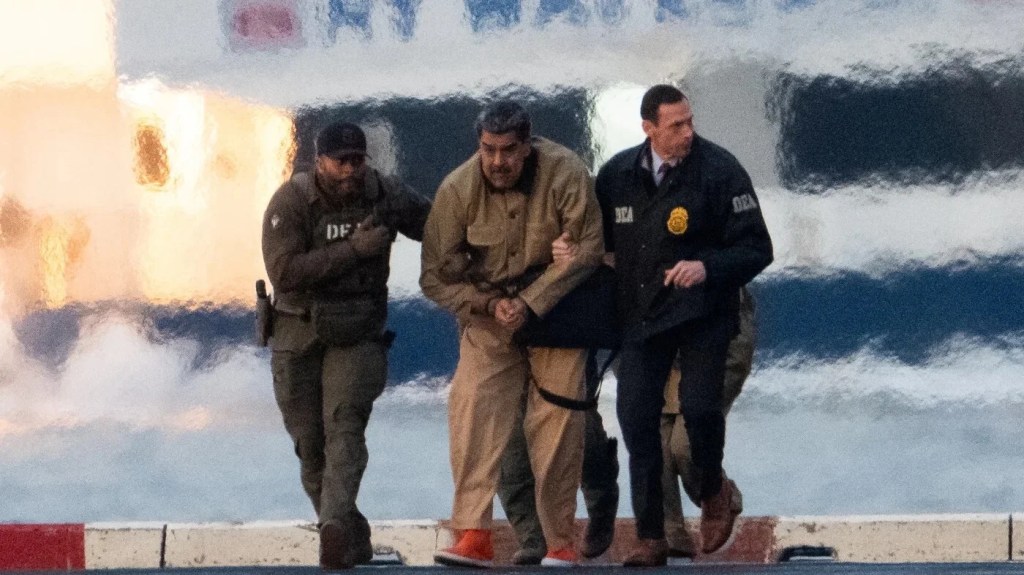
One of my predictions for 2026 was the era of Trump Springs in the western hemisphere. The seizure of Nicolás Maduro by elite Delta forces was a shocking moment and a reflection of the capacity of US military to exert its influence and power in its “near abroad”.
What happens next is likely to be a messy but gradual transition of Venezuela to a country more in hock with US strategic interests (both in foreign policy and oil exports). The media are reporting that the Venezuelan security system have given up on their Cuban and Russian allies and realise that they have little choice but to play the game with the Americans.
Part of this will mean the end of effective support for the beleaguered Cuban regime which is now at real risk of being toppled in its own Trump Spring. If the Cubans realise they have no option but to follow Venezuela in going cap in hand to America and pivoting their countries allegiance then that would be a major win for the Trump Administration.
On a different note, I read a very interesting piece today discussing how the future of Europe, but mainly western Europe, could evolve as the current system falls apart. The specific quote is the following but outlines how chaos will spread as the Muslim Brotherhood seize control of western Europe’s biggest cities in the decades ahead, the massive backlash and rise of the hard-right nationalists in the rest of the countries involved. At that point there is a real risk of a civil war/urban Islamist insurgencies ahead for much of western Europe.
“So we risk the worst of all possible worlds. The political system will become increasingly fragmented and the state itself, including the security forces, will become progressively weaker and demotivated. But politics does not tolerate a vacuum. What political scientists call “ungoverned spaces” don’t actually exist: they are just governed by forces we cannot see. In many parts of the world they include tribal and clan structures, extended family networks, religious organisations and disciplined political parties. We have none of those. Nobody is going to band together to die for inclusive toilets. Ethnic and religious identities exist, of course, but they are not a basis for organisation and political struggle. (The idea that “ethic minorities” could constitute a politically useful bloc in times of crisis will get a large bucket of cold water thrown over it.) The politics of destruction I described last week has ensured not only the destruction of its practitioners, but of any organised means of replacing them. Thus, the future of Europe is more likely to resemble the chaos of factional warfare in Syria and Libya than it is the revolutionary transfer of power that occurred in Iran.
The result will be a kind of anarchy. Not the hippy anarchy of the 1960s, but the anarchy we see today in the suburbs of some major cities in Europe, where the police do not go, and the State as a whole does not intervene. There is an order of sorts, but it is enforced by drug dealers and organised criminal gangs, often linked with religious extremists, who fight each other openly for power and wealth, and corrupt what remains of the local political systems. Such forces can be driven out temporarily, but the resources, and more importantly the social and ideological foundations, for a better system, simply don’t exist. These groups profit from the basic rules of power: you don’t have to be objectively strong, just less weak, and you don’t have to be objectively organised, just less disorganised than anyone else. The current model of control of parts of cities by overlapping groups of criminals and religious extremists may start to generalise quite quickly. At that point, the PMC’s incantations against the [something] Right will reach their logical conclusion, and that Right itself will start to take de facto power of its own in certain places. It’s a lot larger and a lot meaner than the drug gangs and the men with beards.“
I’ve also been using AI, in particular the chat tool Gemini to explore geopolitical scenarios more fully over the coming decades. I specifically asked regarding climate change trends in the wider Middle East and North Africa (2025 was one of the hottest years ever on record). Initial responses confirmed that next decade will be a very challenging decade as rising heat drives large scale migration into the big cities across the MENA region as water scarcity worsens. At some point, the underlying infrastructure of the big urban centres starts to collapse triggering a wider crisis across the region.
Here is what the AI output explained could happen next.
In a scenario where MENA urban centers collapse by 2040, the geopolitical landscape shifts from “managed crisis” to “state fragmentation.”
When combining climate-driven collapse with the specific variable of regime change and subsequent military adventurism, we move into a high-risk security environment. In this model, the “remnants” of MENA military powers do not simply disappear; they transform.
Here is how a military-led “invasion” or large-scale armed movement into Europe could manifest by 2040–2045:
1. The Transition: From National Defense to “State-Led Migration” By 2040, parched and failing regimes (particularly in North Africa) may face a choice: internal revolution or external diversion.
* Weaponized Migration: Instead of an “invasion” in the classical sense (tanks and uniforms), a collapsing regime may use its remaining military assets to forcibly facilitate the movement of millions toward Europe. This “Grey Zone” aggression uses human populations as a kinetic force to overwhelm EU borders, demanding resources or “survival space” in exchange for stopping the flow.
* The “Viking” Scenario: Historical precedents suggest that when a homeland becomes ecologically unviable, the military class doesn’t just starve; it migrates as an armed unit. We could see “Expeditionary Survival Corps”—remnants of disciplined military units—seizing Mediterranean islands or coastal ports to establish secure supply bridgeheads for their families and leaders.
2. Strategic Flashpoints: 2040–2050 The military focus would likely concentrate on three “Chokepoint Corridors”:
The Gibraltar Bridge | Moroccan/Maghreb Military Splinters | Seizing agricultural “Safe Zones” in Southern Spain/Portugal to secure food supply chains.
The Central Med | Libyan/Egyptian Naval Remnants | Establishing “Maritime Mandates”—using remaining naval assets to control gas platforms and Mediterranean trade routes for ransom.
The Balkan Gate | Levantine/Turkish Paramilitaries | Securing land-based “Life Corridors” into the Danube basin, where water and arable land are more resilient.
3. The Shift in Military Objectives A “Climate-Collapse Invasion” would differ from 20th-century warfare in its objectives:
* Targeting Resources, Not Capital: Armies wouldn’t seek to take Berlin or Paris; they would seek to seize Desalination Plants, Vertical Farms, and Hydro-Electric Dams.
* The “Siege of the Fortress”: Europe is already shifting toward “Fortress Europe” policies in 2026. By 2040, these borders may be the most militarized zones on Earth. An “invasion” would likely look like a series of high-intensity, localized breaches of these automated border systems by professional military units using drone swarms and electronic warfare.
4. Why 2040? (The Convergence Point)
This decade is the “Red Zone” because:
* Technological Parity: By 2040, AI-driven drone tech will be cheap and ubiquitous. Collapsing states or non-state actors will have the “force multipliers” necessary to challenge superior but overstretched European militaries.
* The Survival Mandate: Domestic populations will support aggressive external action if the alternative is 100% certainty of starvation at home. This provides the “moral” and political cover for regime leaders to launch desperate external campaigns .
Summary of Risks
The danger is not just “people moving,” but “states moving.” If the Egyptian or Algerian states collapse, their professional militaries (among the largest in the world) may view the Mediterranean not as a border, but as a front line for national survival.
All this matches my old 2018 post Islamic Volkerwanderung, see here, which I continue to hope remains a bad dream rather than a realistic vision of Europe’s future.
 forecastingintelligence