Hi all,
On 1 April, I published an emergency post warning that global energy lockdowns were coming.
My forecast was that the effective closure of the Strait of Hormuz would produce a physical supply shock by around 20 April, followed by petrol and diesel rationing, restrictions on flying, work-from-home guidance and other controls intended to reduce energy consumption.
That forecast was wrong—or, more precisely, it was wrong about how the crisis would be transmitted into the everyday lives of people living in the West.
The underlying supply disruption was every bit as serious as feared. Before the war, nearly 20 million barrels of crude oil and refined products passed through Hormuz every day. By March, export volumes had fallen to less than 10% of their previous level. The International Energy Agency described this as the largest disruption in the history of the global oil market.
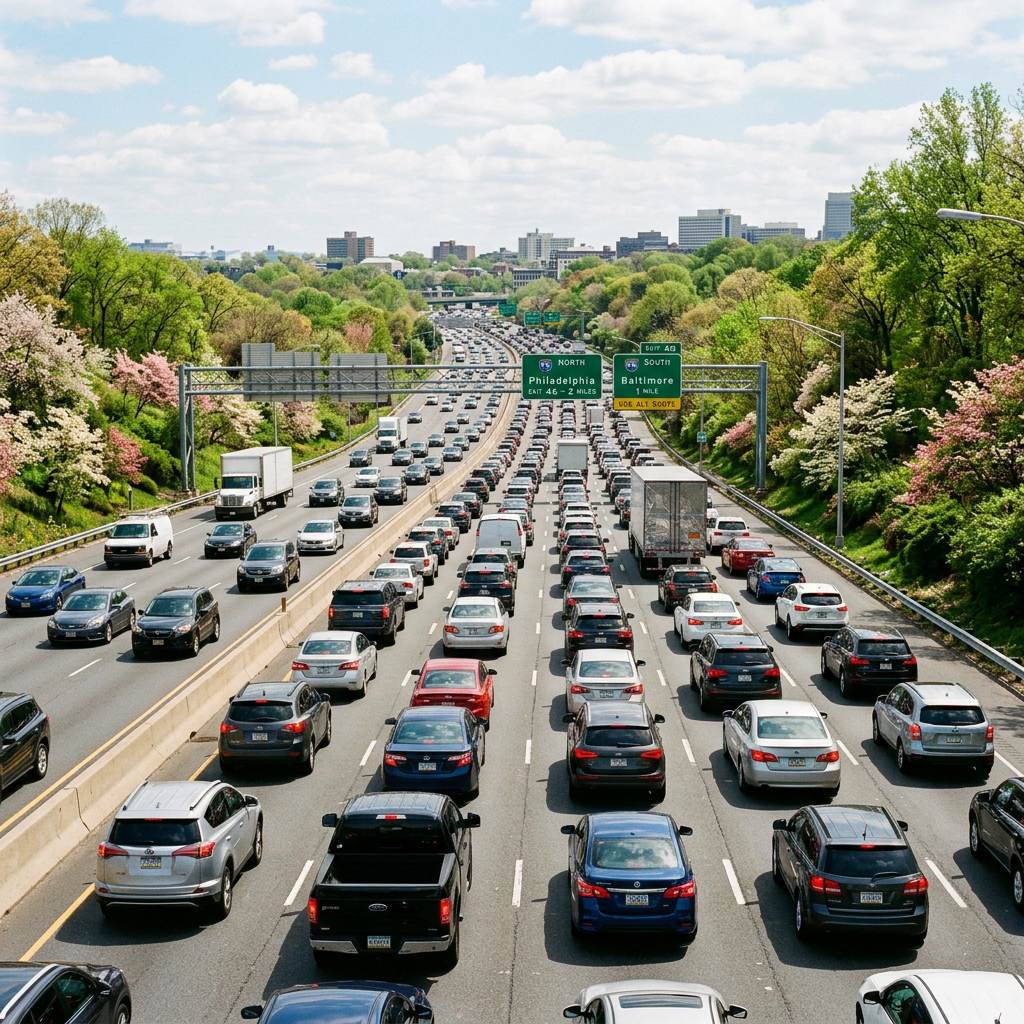
Yet the severe physical shortages and energy lockdowns I expected did not arrive across Europe and North America. Oil prices rose sharply, airfares and other energy-intensive costs increased, and poorer import-dependent countries suffered considerably more disruption. But the petrol stations remained open, private motorists continued driving and Western governments avoided imposing meaningful restrictions on public consumption.
Why?
The short answer is that I underestimated three things: the extraordinary capacity of China to alter the global oil balance; the volume of oil already stored around the world; and the political determination of Western governments to preserve normal consumption for as long as possible, even at the expense of depleting strategic reserves.
China: from price taker to price maker
The biggest error in my analysis was China.
For years, China has been viewed primarily as the world’s largest source of additional oil demand. It imported a record 11.55 million barrels per day in 2025, accounting for roughly two-thirds of its consumption and around 16% of global oil demand. On the surface, this appeared to make China exceptionally vulnerable to a closure of Hormuz.
In reality, China entered the crisis far better prepared than almost anybody realised.
As oil prices rose, Beijing dramatically reduced its purchases. Chinese crude imports fell to 7.12 million barrels per day in June, more than 41% below the previous year and their lowest level since 2016. This sudden withdrawal of the world’s largest importer from the market was critical in allowing the rest of the world to absorb the loss of more than 13 million barrels per day of Middle Eastern exports. The scale and speed of this intervention caught many oil traders and analysts by surprise. It certainly caught me by surprise. Reuters has produced an excellent analysis of China’s response here.
China was able to do this because it had spent years constructing what amounts to an oil fortress.
According to the US Energy Information Administration, China accumulated nearly 1.4 billion barrels of strategic and commercially held oil by the end of 2025. It had been adding around 1.1 million barrels per day to these inventories during that year alone. Beijing therefore entered the war with more than 100 days of normal imports already stored.
China also suspended exports of petrol, diesel and jet fuel, redirected supplies towards its domestic economy, reduced refinery activity and drew selectively from its enormous inventories. Refinery throughput in June was approximately 18% lower than a year earlier. Domestic oil production, meanwhile, had reached a record 4.3 million barrels per day, while the rapid expansion of electric vehicles continued to restrain growth in transport-fuel demand.
This did not mean that China painlessly replaced all its missing Gulf oil. Rather, Beijing managed demand within its industrial system instead of allowing Chinese refiners to compete frantically for every available barrel on the international market.
There is an important qualification. China’s suspension of refined-fuel exports made shortages worse in parts of Asia that depend on Chinese petrol, diesel and jet fuel. Beijing protected itself first. Nevertheless, by withdrawing millions of barrels per day of Chinese crude demand from the international market, it created room for Western and other Asian buyers.
China was no longer merely reacting to the oil price. It was helping to determine it.
That is a profound geopolitical development. China has demonstrated that it can increase imports and fill its reserves when oil is cheap, then sharply reduce its participation in the market when prices rise or supply is threatened. Its inventories, domestic production, refinery controls, coal-fired electricity system and growing electric-vehicle fleet now give Beijing the ability to influence global energy markets in a way previously associated primarily with Saudi Arabia, Russia and the United States.
I badly underestimated this Chinese capacity.
The world consumed its insurance policy
The second reason the shock was contained was the sheer quantity of oil released from storage.
On 11 March, the 32 members of the International Energy Agency agreed to release 400 million barrels from their emergency reserves. This was the largest coordinated release in the organisation’s history. The United States contributed approximately 172 million barrels from its Strategic Petroleum Reserve.
Spread over four months, the international release added roughly 2.5 million barrels per day to the market. It did not replace the oil lost through Hormuz, but it narrowed the immediate deficit and reassured traders that governments would not allow physical shortages to develop without intervention.
Other buffers also mattered. The oil market was in a modest surplus before the war. Saudi Arabia and the UAE redirected several million barrels per day through pipelines bypassing Hormuz. Russian and Iranian oil held in floating storage was released after sanctions were temporarily relaxed. Producers in the Americas and elsewhere increased output and exports where they could.
Individually, none of these measures was sufficient. Combined with China’s retreat from the import market, however, they bought the world valuable time.
The result was that the crisis was met through a vast liquidation of inventories rather than an immediate reduction in Western consumption. Reuters calculated that supply disruptions and the policy response removed around 1.5 billion barrels from global inventories during the first half of 2026. By July, US emergency stocks had fallen to their lowest level since 1983.
This is the key point. The missing energy did not magically reappear. Governments temporarily filled the gap by consuming oil that had been produced and stored in previous years.
We avoided an immediate consumption crisis by running down our insurance policy.
The political refusal to ration demand
The third factor was political rather than geological.
Western governments were determined to avoid anything resembling another lockdown. They understood that restrictions on driving, flying or domestic energy consumption would be politically explosive after the pandemic, the inflation shock and years of falling living standards.
The European response was particularly revealing. By late April, European governments had introduced more than 180 measures in response to the crisis, but fewer than ten—mostly voluntary—were intended to reduce consumption. Instead, governments spent billions on fuel-tax reductions, price caps, subsidies and household support.
As Reuters reported at the time, politicians were much more willing to spend money shielding households from higher prices than to tell voters to drive less. Memories of the French Yellow Vest revolt against higher diesel taxes were never far from policymakers’ minds.
The contrast with Asia was striking. A number of Asian governments introduced remote-working requirements, restrictions on driving, reduced air travel, university closures and public energy-saving campaigns. These countries were generally more dependent on Gulf energy and possessed fewer financial and strategic buffers.
Europe and North America instead chose to defend normality.
This was an understandable political choice. Governments exist in the real world, and imposing rationing before actual shortages emerge risks creating panic buying and destroying public confidence. Strategic reserves were created precisely to respond to major supply disruptions.
But emergency reserves are supposed to bridge a temporary interruption. They cannot replace a major producing region indefinitely. Using them to postpone even modest conservation measures transforms a short-term buffer into a potentially dangerous long-term gamble.
Western governments effectively chose the least visible form of rationing. Instead of rationing current consumption, they rationed future security.
The public was allowed to continue driving and flying, while the cost of maintaining that normality was transferred onto government balance sheets, depleted stockpiles and the eventual need to purchase hundreds of millions of replacement barrels. Rebuilding those reserves will itself increase global oil demand and may place a higher floor under prices during 2027 and 2028.
Wrong on timing, but not necessarily on the danger
So, where does this leave my original forecast?
I was wrong to assume that a physical supply disruption would quickly translate into formal Western demand controls. I underestimated the buffers built into the global system and, above all, the ability of China to remove itself from the market at extraordinary speed.
I also underestimated how far Western governments would go to avoid telling their populations to consume less energy. Faced with a choice between unpopular restrictions today and reduced strategic security tomorrow, they overwhelmingly chose the latter.
However, it would be a mistake to conclude that the energy crisis is over or that the closure of Hormuz no longer matters.
The buffers that prevented a severe shock are finite. Strategic reserves have been depleted. Floating storage has been consumed. The easy pipeline diversions have already been made. China can continue drawing from its inventories, but even its oil fortress is not unlimited. At some point, national stockpiles will have to be rebuilt.
At the time of writing, shipping through Hormuz remains a fraction of its pre-war level, while the conflict and attacks on regional energy infrastructure continue. The latest US government forecasts suggest that some Middle Eastern production could remain offline into 2027. The danger has therefore been postponed and redistributed, not abolished.
The crisis has also exposed a significant division in the world. Wealthy Western states purchased political normality with strategic reserves and public money. China protected itself through centralised control of imports, refining and inventories. Poorer and more import-dependent countries absorbed a disproportionate share of the shortages and compulsory demand reduction.
My forecast of immediate Western “energy lockdowns” was therefore wrong. What emerged instead was subtler: the liquidation of accumulated energy reserves to maintain the appearance of business as usual.
That strategy has worked better and for longer than I expected.
The question now is what happens when the reserves have been depleted, the temporary buffers are gone and the public still expects normality to continue.
We may have avoided the first energy shock.
We should not assume that we have abolished the next one.


Kudos to you for admitting your first forecast was incorrect, and needed amending! We need more of this attitude in public life so that we can all have constructive conversations about reality.
I would suggest that the initial shock was cushioned by the buffers you mentioned, and that perhaps we might not ever see a real “shock”, so to speak. It might be that demand destruction happening naturally as a response to all this will prevent a sudden disruption from occurring.
In the end, we’ll all be poorer without having a particular dislocation to point at and say, “that caused it.”
LikeLike